
Can Testosterone Cause Female Hair Loss?
Testosterone, a hormone traditionally associated with men, can surprisingly play a significant role in female hair loss as well. While the relationship between testosterone and hair loss is complex, understanding the underlying mechanisms can help women address this common yet frustrating concern.
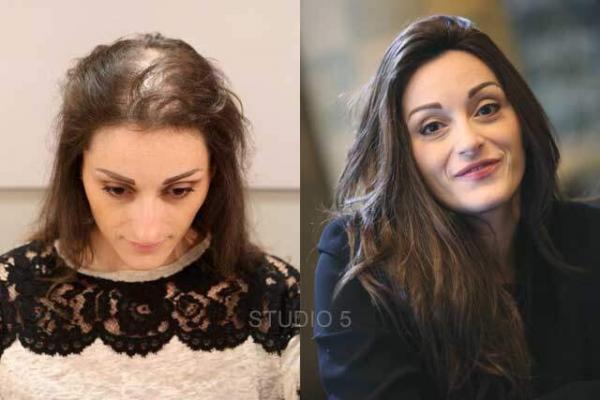
Androgenetic Alopecia: The Culprit Behind Female Hair Loss
The medical term for female hereditary hair loss is Androgenetic Alopecia, which refers to an inherited sensitivity to male hormones known as “androgens.” Contrary to popular belief, androgens are not exclusive to men; they are present in both genders and play a crucial role in various physiological processes, including puberty, organ regulation, and estrogen synthesis in women.
In men, androgens are the primary drivers of male pattern baldness, causing receding hairlines in men and balding in the crown area. Similarly, in women, androgens are believed to be responsible for diffuse thinning in the frontal region, as well as receding hairlines and temples in more severe cases. However, the determining factor is not necessarily the amount of androgens present, but rather the individual’s sensitivity to these hormones.
The Role of Testosterone and DHT in Hair Follicle Miniaturization
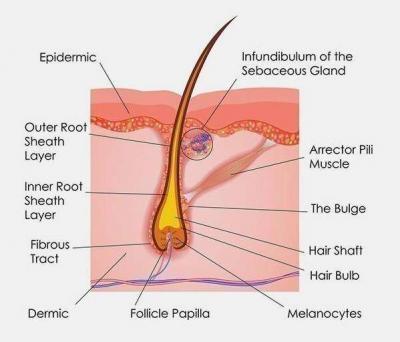 Within the body, testosterone is converted to a more potent androgen called dihydrotestosterone (DHT) by an enzyme called 5-alpha-reductase. While both testosterone and DHT can contribute to hair loss, DHT is considered the more influential of the two.
Both men and women have circulating androgens, but the levels of testosterone and DHT are generally higher in men. Androgens, particularly DHT, have been identified as the primary culprit in triggering a process known as hair follicle miniaturization.
When DHT binds to receptors in the hair follicles, it initiates a gradual miniaturization process. Over time, this causes the follicles to produce thinner, shorter, and wispier hairs with each successive hair cycle. This miniaturization can result in a noticeable loss of volume and coverage in the affected areas, leading to the characteristic thinning and receding seen in female pattern hair loss.
Hormonal Imbalances and Their Impact on Hair Health
Hormones, both male and female, play a critical role in the overall health and function of the body, including the hair follicles. During significant hormonal transitions, such as perimenopause and menopause, women often experience a decline in hormone levels, including a potential decrease in estrogen levels.
This hormonal imbalance can tip the scales in favor of androgens, allowing DHT to exert a more significant influence on the hair follicles. As a result, women may find themselves facing unwanted scalp hair loss, often manifesting as a receding hairline and temple recession.
Identifying the Causes of Female Hair Loss
It’s important to note that while testosterone and its derivative, DHT, can contribute to female hair loss, they are not the only factors at play. Hair thinning in women can be influenced by a variety of intrinsic (internal) and extrinsic (external) factors, including genetics, overall wellness, diet, stress, medications, and even hair styling habits.
Obtaining an accurate diagnosis is the important first step in developing an effective hair loss treatment or hair restoration plan. A comprehensive evaluation by a dermatologist or trichologist hair loss specialist can help identify the underlying causes of hair thinning and guide the selection of appropriate treatment strategies.
Treating Androgenetic Alopecia in Women
When it comes to treating female pattern hair loss, a multifaceted approach is often necessary. Once an accurate diagnosis is obtained and baseline measurements are established, a customized therapeutic regimen can be developed to address both the intrinsic and extrinsic factors influencing the hair follicles.
This may include:
- Reducing or adjusting testosterone replacement therapy
- Incorporating anti-androgen therapies (pharmaceutical or herbal/nutritional)
- Utilizing medical hair loss treatments (such as topical solutions, regenerative therapies, or low-level laser therapy) to enhance follicle function and resilience
- Non-surgical women’s hair replacement options such as custom women’s hair systems, wigs, or toppers.
By addressing the various contributing factors, women can often achieve significant improvements in hair density, volume, and coverage, even in cases where testosterone or DHT is a primary driver of the hair loss.
The Importance of Early Intervention and Personalized Care
When it comes to female hair loss, early intervention is key. The sooner the underlying causes are identified and addressed, the better the chances of preserving and restoring the health and vitality of the hair follicles.
At Studio 5 Hair Gallery in Mechanicsville, Maryland, our experienced women’s hair restoration specialists work closely with each client to develop a personalized treatment plan. This comprehensive approach, which considers your specific hair loss situation, degree and type of hair loss, medical history, as well as career and other lifestyle factors, is crucial in helping you regain control of your hair and achieving the best possible outcomes.
Prioritizing Scalp and Follicle Health
Maintaining the overall health of the scalp and hair follicles is crucial for preventing and treating female hair loss. This involves addressing any underlying scalp conditions, promoting healthy blood circulation, and providing the necessary nutrients and support for optimal follicle function.
Through a combination of targeted treatments, lifestyle modifications, and ongoing monitoring, women can take proactive steps to protect their hair and encourage natural regrowth, even in the face of hormonal challenges or genetic predispositions.
Women’s Hair Restoration: Maryland, Washington DC
Fortunately, the field of female hair restoration has made significant advancements in recent years, offering women a wide range of non-invasive and effective solutions to address their hair loss concerns. From advanced laser hair therapy and topical treatments to cutting-edge hair replacement technologies, there are a host of options available to help women of all ages and hair types regain their confidence and restore their natural, healthy-looking hair.
By working closely with a qualified hair loss professional, women can explore the latest technologies and explore customized treatment plans that address the underlying causes of their hair thinning, whether it’s related to testosterone, DHT, or other contributing factors.
With an individually customized approach to hair loss treatment and hair restoration, the impact of testosterone and other contributing factors can be effectively managed, allowing women to feel beautiful, confident, and have the vibrant, youthful hair they want and deserve.